There was a time when shopping felt like something.
Walking into the original Marshall Field’s department store left you in awe — the grand scale and ornate details were an invitation to step off a busy street and into a different world, one you wanted to be a part of. Soft piano at Bergdorf’s. A helpful salesperson at Barney’s guided a purchase with care and attention. Even buying something small at Tiffany & Co. left you feeling a part of it.
Those brands weren’t just selling products. They were creating experiences, and that experience was the brand. Today, most online shopping feels nothing like that. The dominant model is simple: Find the product. Check the reviews. Compare the price. Buy.
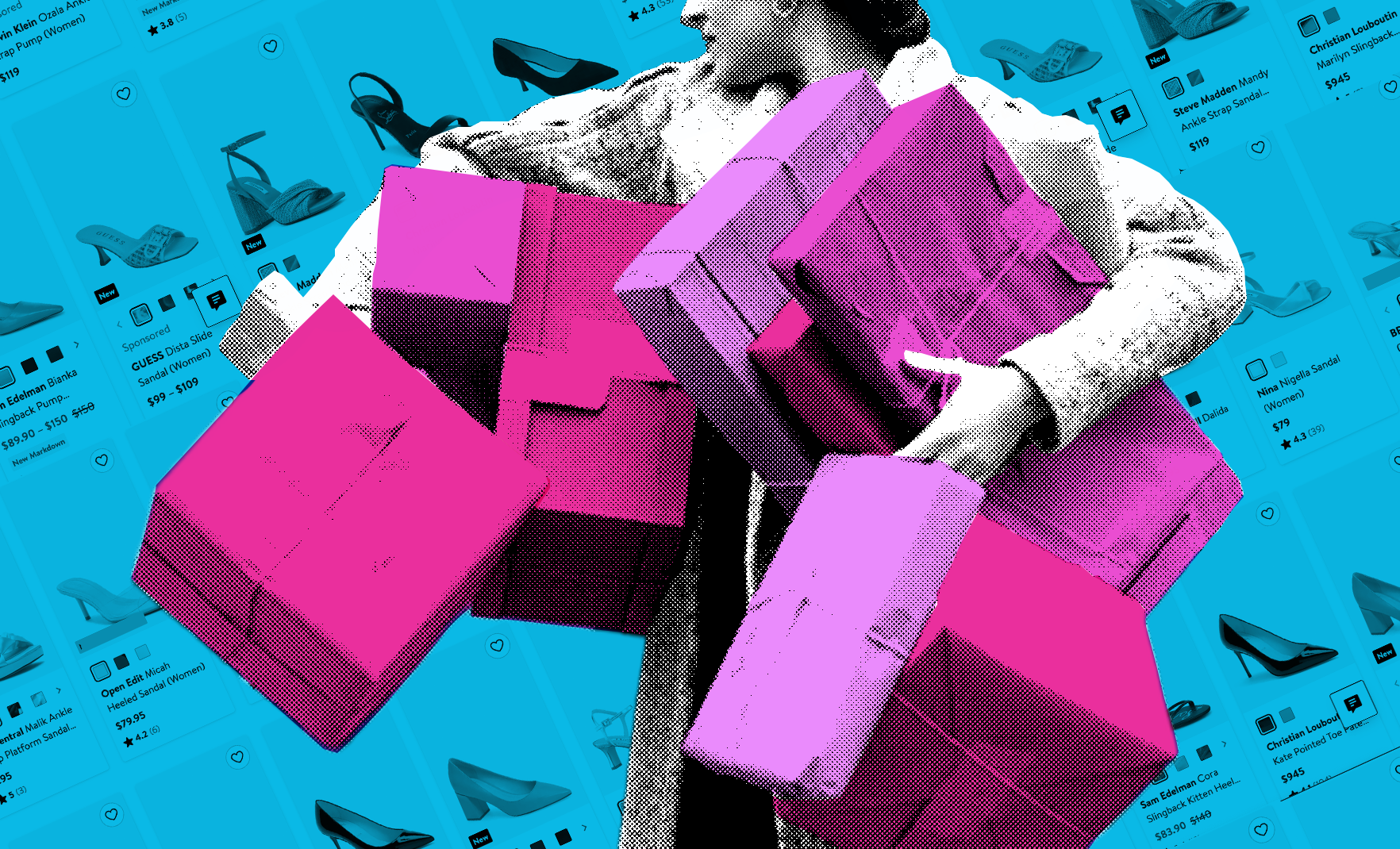
It works, but it has flattened nearly every brand into the same experience. Scroll through most e-commerce sites and you’ll see it: Grids. Filters. Star ratings. “You may also like.” Functionally efficient, but emotionally empty.
We’ve created what I think of as the Sunday Circular Effect—a cluttered online shopping experience where everything is reduced to price, placement, and speed.
On platforms like Amazon, you’re often not even buying from a brand, you’re buying a product and it could come from anyone. The interface doesn’t care, and increasingly, neither do we.
Emotionally connected customers are more than twice as valuable as highly satisfied ones.
But we know something important: emotion drives value.
According to Harvard Business Review, emotionally connected customers are more than twice as valuable as highly satisfied ones. They spend more, return more often, and advocate on a brand’s behalf.
Connection isn’t a “nice to have,” it’s the business model. When you buy an engagement ring from Tiffany & Co., you’re not just buying a diamond. You’re buying into a story—the heritage, the ritual—flashes of Audrey Hepburn in black and white. The product is part of it, but the meaning is why you are making the purchase.
Earlier in my career, I worked on designer collaboration campaigns for Target. Different category, same principle: we didn’t just present products—we built boutique landing pages that included custom photography, shoppable video, and interviews with designers. We created immersive shopping experiences that made people feel something before they ever clicked “buy.”
The technology hasn’t changed. People use the same devices they shop on to watch films, documentaries, and long-form content. The capacity for depth is already there but we’ve chosen not to use it.
Instead, we’ve optimized for frictionless transactions—and in doing so, stripped away the very things that make brands memorable. This is especially challenging for emerging brands. If every shopping experience looks and functions the same, how do you stand out? How do you build trust, signal care, or show that what you’re offering is different?
We’re likely not going back to the opulence of legacy department stores anytime soon, but we do need to rethink what the online shopping experience is supposed to do and strike a balance.
It shouldn’t just convert. It should connect.
Because behind every “Buy Now” button is still a person making a decision. And the brands that win won’t just be the fastest or the cheapest.
They’ll be the ones that make people feel something—and give them a reason to come back.
More Whitticisms

Suite à la Parisienne
Saint Paul is filled with historic homes, but none quite like this.
April 16, 2025

Saint Paul is filled with historic homes, but none quite like this.
Processing Grief through Art:
The Story of George Floyd’s Memorial Sculpture
May 28, 2024
The Story of George Floyd’s Memorial Sculpture
A WHITTIER CHECKLIST
The must-have marketing tool to add to your toolbox.
October 14, 2023
The must-have marketing tool to add to your toolbox.
There was a time when shopping felt like something.
Walking into the original Marshall Field’s department store left you in awe — the grand scale and ornate details were an invitation to step off a busy street and into a different world, one you wanted to be a part of. Soft piano at Bergdorf’s. A helpful salesperson at Barney’s guided a purchase with care and attention. Even buying something small at Tiffany & Co. left you feeling a part of it.
Those brands weren’t just selling products. They were creating experiences, and that experience was the brand. Today, most online shopping feels nothing like that. The dominant model is simple: Find the product. Check the reviews. Compare the price. Buy.
It works, but it has flattened nearly every brand into the same experience. Scroll through most e-commerce sites and you’ll see it: Grids. Filters. Star ratings. “You may also like.” Functionally efficient, but emotionally empty.
We’ve created what I think of as the Sunday Circular Effect—a cluttered online shopping experience where everything is reduced to price, placement, and speed.
On platforms like Amazon, you’re often not even buying from a brand, you’re buying a product and it could come from anyone. The interface doesn’t care, and increasingly, neither do we.
But we know something important: emotion drives value.
According to Harvard Business Review, emotionally connected customers are more than twice as valuable as highly satisfied ones. They spend more, return more often, and advocate on a brand’s behalf.
Connection isn’t a “nice to have,” it’s the business model. When you buy an engagement ring from Tiffany & Co., you’re not just buying a diamond. You’re buying into a story—the heritage, the ritual—flashes of Audrey Hepburn in black and white. The product is part of it, but the meaning is why you are making the purchase.
Earlier in my career, I worked on designer collaboration campaigns for Target. Different category, same principle: we didn’t just present products—we built boutique landing pages that included custom photography, shoppable video, and interviews with designers. We created immersive shopping experiences that made people feel something before they ever clicked “buy.”
The technology hasn’t changed. People use the same devices they shop on to watch films, documentaries, and long-form content. The capacity for depth is already there but we’ve chosen not to use it.
Instead, we’ve optimized for frictionless transactions—and in doing so, stripped away the very things that make brands memorable. This is especially challenging for emerging brands. If every shopping experience looks and functions the same, how do you stand out? How do you build trust, signal care, or show that what you’re offering is different?
We’re likely not going back to the opulence of legacy department stores anytime soon, but we do need to rethink what the online shopping experience is supposed to do and strike a balance.
It shouldn’t just convert. It should connect.
Because behind every “Buy Now” button is still a person making a decision. And the brands that win won’t just be the fastest or the cheapest.
They’ll be the ones that make people feel something—and give them a reason to come back.
— By Montana Scheff, Executive Creative Director, Whittier